
Preface to the AI-Native Development Journey
The Transformation We Are Living Through
In 2021, GitHub released Copilot, and the software development world changed forever. What started as "autocomplete on steroids" has become something categorically different. Today, in 2026, AI-assisted development is not experimental and it is no longer just assistance. Autonomous coding agents read entire codebases, plan multi-step work, run commands, open pull requests, and operate in parallel across the software development lifecycle. The default question on strong teams is no longer "should we use AI" - it is "how do we run agents in production without losing our judgment, our quality bar, or our budget."
This book chronicles that transformation through the lens of practical, production experience. I have operationalized agentic AI across the full SDLC as production infrastructure, not sandbox tooling - Claude Code, GitHub Copilot, OpenAI Codex, AWS Kiro, and Gemini running as first-class CI/CD pipeline stages. I have seen firsthand what works, what fails, and what patterns emerge when humans and agents build real software together.
Much of what follows is grounded in one stretch of that journey: leading SaaS engineering at a company I will refer to as the Medical SaaS Company, where I owned an AI-first initiative and operationalized agentic AI across a regulated, multi-product portfolio. Two of those products were AI-native, and I will call them Watchdog (agentic supply-chain and contract intelligence) and Speedy Clinical (clinical intelligence). The real company, product, and customer names are anonymized throughout to honor confidentiality - the lessons are not. You will meet Watchdog and Speedy Clinical again in the case studies.
What This Book Is
This is not a theoretical exploration of what AI might do someday. This is a technical manual for developers and engineering leaders who want to leverage AI agents effectively right now. You will find:
* Detailed breakdowns of Claude Code, GitHub Copilot, Cursor, Codex, Gemini, and AWS Kiro
* Production-ready patterns for context management and CLAUDE.md / AGENTS.md files
* The third wave of AI communication - intent engineering - and the executable intent specification
* MCP, A2A, agent frameworks, and async background agents
* Evals as CI gates, agent SLOs, and FinOps for AI
* Real metrics and case studies from production systems
* Debugging, testing, and code-review strategies with agentic AI
Who This Book Is For
This book assumes you are a working developer or engineering leader with professional experience. You understand Git, modern development, and basic software architecture. You are past the marketing-hype stage and want technical depth - how to ship agents that achieve outcomes, not demos that look good on a stage. You care about productivity, code quality, maintainability, and cost.
Whether you are a solo developer, team lead, or executive, you will find practical guidance for integrating agents into production. The examples span multiple languages and frameworks, but the principles apply universally.
The Evolution of "Programming"
In 1945, programming meant physically rewiring machines. In 1970, it meant punch cards and assembly. In 1995, it meant high-level languages and IDEs. In 2010, it meant frameworks, libraries, and Stack Overflow. In 2026, it means directing AI agents that understand your codebase, plan and implement features, write and run tests, review pull requests, and operate inside your pipeline - while you own architecture, intent, and judgment.
Each shift brought resistance. "Real programmers" don't use high-level languages. "Real programmers" don't use IDEs. "Real programmers" don't copy-paste from Stack Overflow. And recently: "Real programmers" don't use AI. That debate is settling the way the others did.
History shows that productivity tools always win. The question is not whether to adopt agentic development, but how to adopt it effectively and responsibly. This book answers that question.
The Great Inversion
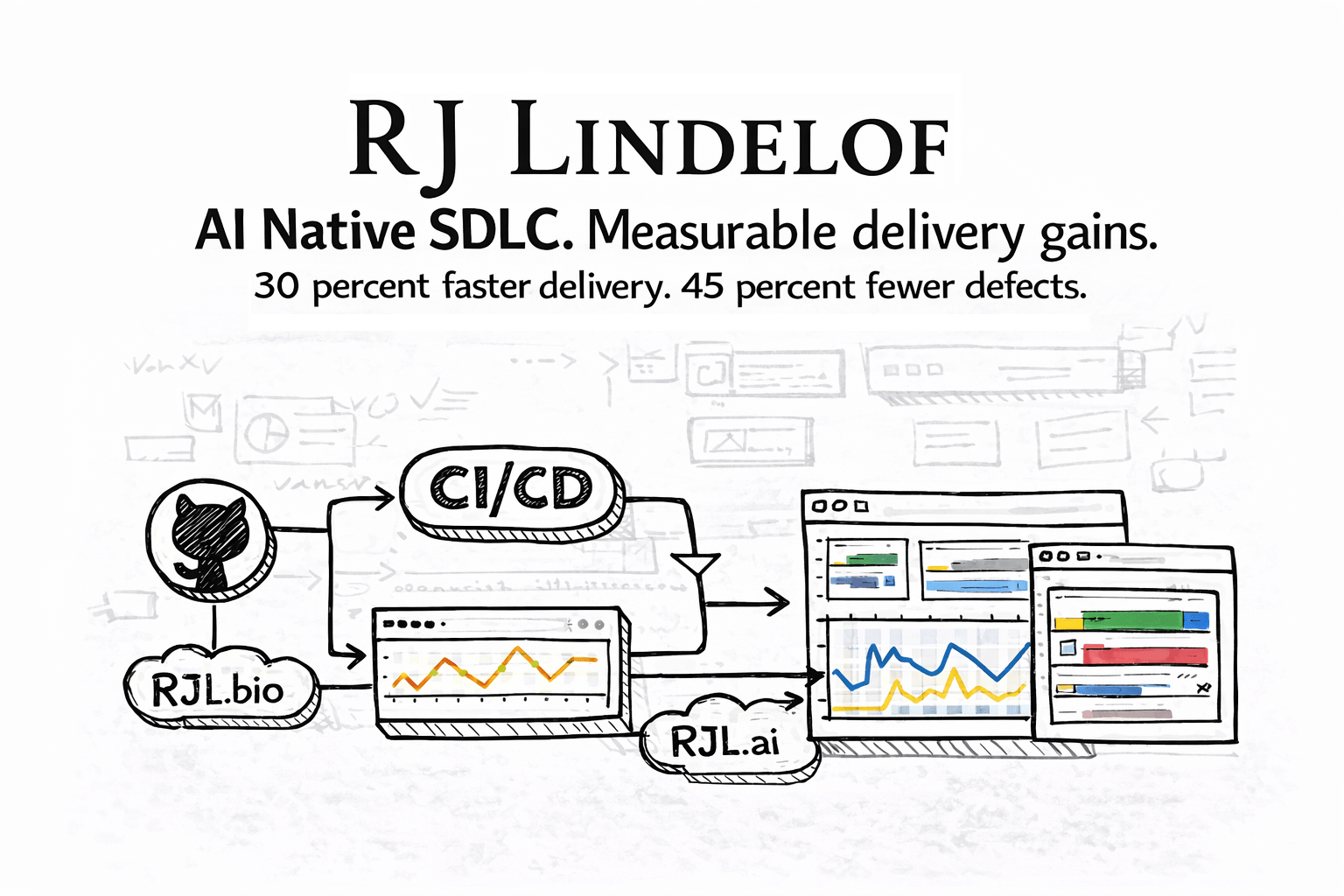
This book is built on a premise: software development is being reorganized around how AI actually operates. Rather than retrofitting AI into existing workflows, the future belongs to those who invert the process.
AI operates on context, not abstraction. For years we architected systems around how we think - classes, layers, patterns, frameworks. Then frontier models matured and the rules changed. By 2026 the model itself is table stakes: Anthropic's Claude 5 family, OpenAI's GPT-6 Astra and Codex, Google's Gemini 4 Argon, and SpaceXAI's Grok 4.7 are all remarkable out of the box. The fastest teams are not winning by writing better prompts, or even by picking the best model. They win by treating context as a first-class concern - standardized (AGENTS.md, CLAUDE.md), versioned, and made infrastructure - and then by going one layer deeper, to intent.
Five principles guide this transformation:
1. Abandon Legacy Integration Patterns
Stop duct-taping AI onto old workflows. Real transformation reimagines processes from first principles, not by layering AI atop existing practice.
2. Demand Measurable Proof
AI must prove its value, not just promise it. Systems must deliver tangible results that skeptical teams can verify - earned trust, not hype.
3. Embed Structurally, Not Superficially
Embed with purpose, don't retrofit with hope. AI becomes foundational architecture, not a bolted-on feature.
4. Prioritize Team Acceleration Over Pure Automation
The goal is freeing engineers to solve bigger problems by creating clarity and sustained flow - not simply automating away human work.
5. Leverage Senior Expertise at Scale
AI handles code generation; senior engineers architect systems and govern agents. This multiplies experienced talent rather than replacing it.
The Competitive Shift
Competitors optimizing prompts will lose to competitors architecting context - and competitors architecting context without intent will lose to those who define what their agents must achieve. The winner is determined by better information flow and clearer intent, not better code. This book teaches you how to architect both.
A Living Document
AI development tools evolve weekly. By the time you read this, new models will have launched and new patterns will have emerged. Think of this book as a snapshot of best practices in 2026, with foundational principles that outlast any specific tool. The techniques you will learn - context management, intent specification, strategic tool selection, evals, and governance - transcend any single product. Master these, and you will adapt quickly as the landscape moves.